
Your Cart is Empty








Overhead Crane Load Testing: Requirements, Standards, and How to Stay Compliant

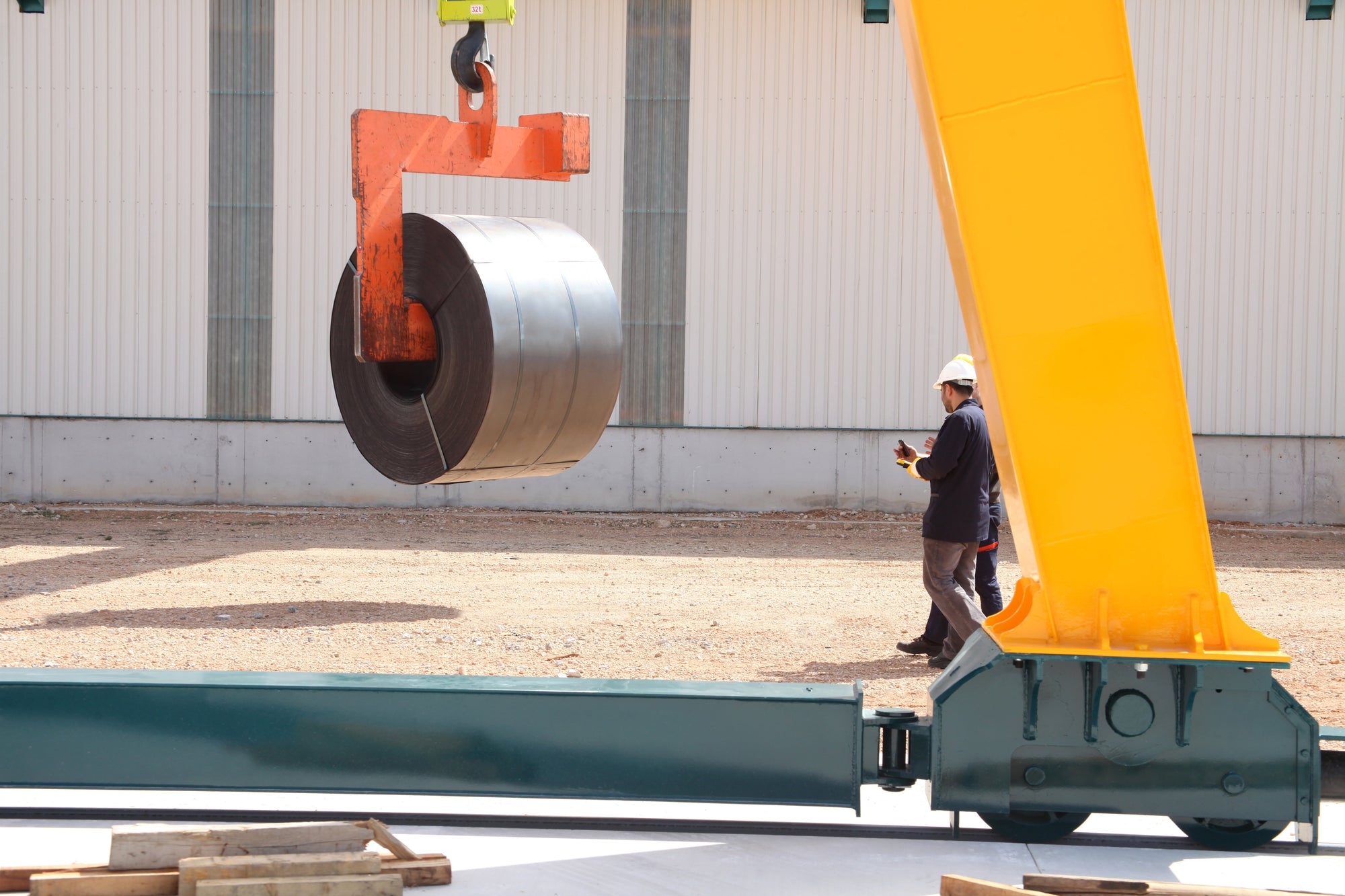
On March 31, 2026, about a 48,000-pound metal spool fell from an overhead crane at Specialty Rolled Metals LLC inCarol Stream, Illinois, killing a 55-year-old worker during a routine loading operation. Weeks earlier, OSHA fined SpaceX $115,850 after acrane collapse at its Starbase facility, citing seven serious violations including a repaired crane returned to service without a qualified person inspection. These incidents are not outliers. These incidents are not outliers. TheU.S. Bureau of Labor Statistics reports an average of 44 crane-related fatalities per year in the United States, and just over half of fatal crane injuries involve workers struck by objects or equipment.
Overhead crane load testing exists to prevent exactly these outcomes. It verifies that a crane can safely handle its rated capacity before anyone works under the hook. Yet the requirements for when, how, and at what load to test are scattered across OSHA regulations, ASME consensus standards, and CMAA (Crane Manufacturers Association of America) best-practice guidelines. This article consolidates those crane load test requirements into a single reference so facility managers, maintenance teams, and safety directors can stay compliant and protect their people.
Table of Contents
- What Is Overhead Crane Load Testing?
- When Is Overhead Crane Load Testing Required?
- What Standards and Regulations Govern Overhead Crane Load Testing?
- How Overhead Crane Load Testing Is Conducted
- Crane Load Test Documentation Requirements
- The Cost of Non-Compliance
- Common Misconceptions About Crane Load Testing
- Key Takeaways
What Is Overhead Crane Load Testing?
Overhead crane load testing is the process of applying a controlled load to a crane to verify its structural integrity, mechanical function, and safety systems before it enters or returns to service. The test confirms that every component in the load path, from the hook and wire rope to the hoist, trolley, bridge, and runway, performs correctly under stress.
Not all load tests are the same. The terminology creates confusion, so getting the definitions right matters.
Proof Load Test vs. Rated Load Test
A proof load test applies a load above the crane's rated capacity, typically 125% of rated load for new installations. Its purpose is to verify structural adequacy and establish or confirm the crane's rated capacity.OSHA 1910.179(k)(2) caps test loads at 125 percent of rated load unless the manufacturer recommends otherwise, which establishes the 125% proof load standard.
A rated load test applies a load at 100% of the crane's rated capacity. It verifies that the crane can safely perform all functions while supporting its full rated load. Rated load tests are commonly used forperiodic testing, post-repair verification, and situations where a full proof load test is unnecessary.
Static vs. Dynamic Testing
A static load test suspends the test load without crane motion. It checks structural deflection under load and confirms the hoist brakes can hold the load in a stationary position. Adynamic load test operates the crane through all motions under load: lifting, lowering, trolley travel, and bridge travel. Dynamic testing verifies that brakes, speed controls, limit switches, and mechanical systems perform correctly during real movement.
Most comprehensive overhead crane load testing programs include both static and dynamic components.
When Is Overhead Crane Load Testing Required?
This is the question that generates the most confusion, and where the standards overlap. The short answer: any time the crane is new, moved, structurally changed, or returned from a significant repair. The table below maps every trigger event to its required test load, scope, and governing standard.
|
Trigger Event |
Test Load Required |
Test Scope |
Standard Reference |
|
New installation |
100-125% of rated load |
All design functions: lift, lower, trolley travel, bridge travel, limit devices |
ASME B30.2-2022, OSHA 1910.179(k)(2) |
|
Reinstallation |
100-125% of rated load |
All design functions |
ASME B30.2-2022 |
|
Alteration |
100-125% of rated load |
Required unless qualified person determines otherwise |
ASME B30.2-2022 |
|
Repair |
100-125% of rated load |
Required unless qualified person determines otherwise |
ASME B30.2-2022 |
|
Modification |
100-125% of rated load |
Required unless qualified person determines otherwise |
ASME B30.2-2022 |
|
Re-rating |
Test at new rated capacity |
All design functions |
ASME B30.2, OSHA 1910.179(b)(3) |
|
After overload, dropped load, or collision |
Per qualified person determination |
Structural inspection plus load test |
ASME B30.2, industry best practice |
|
Periodic (best practice) |
100% of rated load |
All functions, with pre- and post-test inspection |
CMAA Spec 78, Section 4.7 (every 4 years) |
|
Wire rope or load chain replacement |
Typically no full load test |
Operational test and rope inspection |
ASME B30.2-2022 (per qualified person) |
New Installations
Every new overhead crane must be load tested before initial use.ASME B30.2-2022 strengthened this to a mandatory requirement, removing the ambiguity present in earlier editions.OSHA 1910.179(k) independently requires rated load tests for new cranes. The industry-standard proof load for new overhead crane installations is 125% of rated capacity, applied across all design functions including lifting, lowering, trolley travel, bridge travel, and limit device testing.
Reinstallations
A crane that has been disassembled and moved to a new location generally requires a full load test before returning to service.ASME B30.2-2022 groups reinstalled cranes with altered, repaired, and modified cranes: a load test is required at 100-125% of rated load across all design functions unless a qualified person determines otherwise.
Alterations, Repairs, and Modifications
ASME B30.2-2022 requires crane load testing after repair, alteration, or modification, with an important nuance. A qualified person may determine that a load test is not required, allowing the crane to return to service without one. This authority is not unlimited: the qualified person must document the basis for the determination and take responsibility for the decision. For significant structural repairs, modifications that affect load paths, or changes to rated capacity, a load test is the expected path to return to service.
When a load test is performed after a repair, the test load falls within the 100-125% range specified in the standard, with the specific percentage determined by the qualified person based on the nature of the repair.
One common exception that catches people off guard:wire rope and load chain replacement does not require a load test. ASME B30.2-2022specifically excludes rope and chain replacement from load test requirements. An operational test of the hoist is sufficient.
Re-Rating
When a crane's rated capacity changes, whether increased or decreased, the crane must be load tested at the new rated capacity. All design functions must be verified under the new load rating.
After an Incident
Following an overload event, dropped load, or collision, a qualified person must assess the crane and determine the appropriate testing protocol. This typically involves a thorough structural inspection followed by a load test, though the specific requirements depend on the nature and severity of the incident.
Periodic Testing: Best Practice vs. Mandatory
Here is where ASME B30.2 and CMAA Specification 78 diverge. ASME B30.2 does not mandate periodic load testing for cranes in continuous service, provided no alteration, repair, modification, or incident has occurred.CMAA Specification 78, Section 4.7, recommends load testing existing crane and hoist systems at a minimum of once every four years at 100% of rated load, with a pre-test and post-test inspection. This four-year cycle represents the industry best practice that most safety-conscious facilities follow.
What Standards and Regulations Govern Overhead Crane Load Testing?
OSHA 1910.179
The Occupational Safety and Health Administration's (OSHA) general industry standard for overhead and gantry cranes, 29 CFR 1910.179, establishes the federal baseline.Section 1910.179(k)(1) requires operational testing for new and altered cranes. Section 1910.179(k)(2) caps test loads at 125% of rated load unless the manufacturer recommends otherwise. OSHA's2009 standard interpretation letter confirms these requirements and references ASME B30.2 as the recognized consensus standard for testing procedures.
ASME B30.2-2022
ASME B30.2-2022, which took effect August 24, 2023, is the current consensus standard for overhead and gantry cranes. The 2022 edition made several significant changes to ASME B30.2 load testing requirements. It elevated the new crane load test from a recommendation to a mandatory requirement. It consolidated and clarified language around alterations, repairs, and modifications. And it more clearly defined operational test requirements for hoist limit devices, specifying that these tests should be performed under no-load conditions.
CMAA Specification 78
CMAA Specification 78, Section 4.7, fills a gap that neither OSHA nor ASME addresses directly: periodic retesting of cranes in continuous service. The specification calls for load tests at a minimum ofonce every four years at 100% of rated load. It also requires a written report of the load test and inspection results maintained on file for the life of the equipment.
State-Specific Regulations
Some states impose requirements that exceed federal standards.California's Title 8, Section 5022, requires proof load testing at initial certification and every four years thereafter. It also mandates testing after major modifications or repairs and after any equipment has been out of service for six months or more. Facilities operating in state-plan states should verify whether additional requirements apply.
How Overhead Crane Load Testing Is Conducted
A properly executed load test follows a defined sequence:
-
Pre-test inspection of all crane components: structure, wire rope, hooks, brakes, and safety devices
-
Clear the testing area of personnel and obstacles; establish an exclusion zone
-
Apply the test load gradually using certified test weights or water bags
-
Static hold to check structural deflection and brake holding capacity
-
Dynamic testing through all required motions under load: lift, lower, trolley travel, bridge travel
-
Test all limit devices and safety functions
-
Post-test inspection for signs of damage, deformation, or distress
-
Document all findings in a written test report
Modern Testing Methods: Water Bags vs. Solid Weights
Traditional overhead crane proof load tests used steel or concrete blocks as test weights. These remain in use but present logistical challenges for large-capacity cranes: transporting, positioning, and rigging 50 or 100 tons of solid weight is time-consuming and carries its own safety risks from shock loading.
Water-filled weight bags have become the preferred method for many testing providers. The load is applied gradually by filling the bags with water, which prevents shock loading and allows precise weight control through digital flowmeters. What used to take a full day with solid weights can now be completed in a few hours. Empty bags are compact for storage and transport, and wireless load cells enable real-time monitoring during the test.
Who Can Perform a Load Test?
OSHA andASME B30.2 require that load tests be directed or performed by a designated or qualified person. A qualified person is someone with a recognized degree or professional certificate, or extensive practical knowledge and experience, who is capable of identifying hazards in the work environment. Under ASME B30.2-2022, a qualified person may also determine that a load test is not required for reinstalled, altered, repaired, or modified cranes, though this discretion does not apply to new crane installations.
Crane Load Test Documentation Requirements
Documentation is not optional.OSHA requires that test reports be placed on file where readily available to appointed personnel. CMAA Specification 78 goes further, requiringwritten reports maintained for the life of the equipment.
A complete crane load test documentation record should include the crane identification and location, the date of the test, the reason for the test (new installation, repair, periodic, etc.), the test load applied and the method used, a description of all functions tested, the results of pre-test and post-test inspections, any deficiencies identified, and the name and qualifications of the person who directed or performed the test.
Poor documentation is a common citation trigger. In theSpaceX Starbase case, one of the seven serious violations involved a crane returned to service without an inspection confirming repairs met the manufacturer's criteria. The$16,550 maximum penalty per serious violation makes the paperwork worth the effort.
The Cost of Non-Compliance
OSHA's 2026 penalty structure sets the maximum fine at$16,550 per serious violation and$165,514 per willful violation, with a statutory minimum for willful violations. SpaceX's$115,850 in combined fines across seven serious violations demonstrates that OSHA applies maximum penalties when it finds systemic gaps.
But fines are the least of it. TheCarol Stream incident resulted in a fatality that no penalty can undo. Crane accidents occur equally atconstruction sites and factories or plants at 24% each, which means facility managers in manufacturing and warehousing face the same risk profile as construction operators.
The current tariff environment adds another dimension. Withsteel tariffs now at 50% and nonresidential construction input prices surging at a 12.6% annualized rate in early 2026, more facilities are choosing to repair, modernize, and re-rate existing cranes rather than purchase replacements. Every one of those repairs, alterations, and modifications triggers an overhead crane load testing requirement under ASME B30.2. Facilities that defer testing to save costs are compounding their risk at exactly the wrong time.
Standard overhead crane inspection costs are trivial compared to a single serious OSHA violation, let alone a fatality investigation.
Common Misconceptions About Crane Load Testing
"We only need to load test new cranes." False.OSHA andASME B30.2 require load testing for new, reinstalled, altered, repaired, and modified cranes. Any structural or mechanical change can trigger a test requirement.
"Wire rope replacement requires a full load test." Usually not. UnderASME B30.2-2022, rope and chain replacement is classified as a repair, and qualified persons routinely waive the full load test. An inspection of the new rope and an operational test of the hoist are typically sufficient.
"ASME B30.2 requires periodic load testing." Not exactly. ASME B30.2 does not mandate periodic retesting for cranes in continuous service. It isCMAA Specification 78 that recommends testing every four years as an industry best practice.
"Repaired cranes can skip the load test if a qualified person says so." True, with limits. UnderASME B30.2-2022, a qualified person may determine that a load test is not required after repair, alteration, or modification. This discretion does not apply to new crane installations, and significant structural repairs almost always trigger a load test in practice.
Key Takeaways
Overhead crane load testing is one of the most clearly defined safety requirements in industrial operations, and one of the most commonly misunderstood. The trigger events are specific. The test load percentages are documented. The standards are accessible. There is no ambiguity about whether load testing matters; the Carol Stream fatality and SpaceX citations in the first quarter of 2026 alone make that case.
Facility managers and maintenance teams who build a proactive testing program, one that follows the CMAA four-year cycle, documents every test thoroughly, and ensures a qualified person oversees each event, protect their workers and their operations. Those who treat load testing as an afterthought are betting against the data.
If your facility operates overhead cranes and you need to schedule a load test, assess your current testing program, or plan crane service around upcoming repairs or modifications, HOJ Innovations' crane service team can help you build a compliant testing schedule that fits your operations.