
Your Cart is Empty






Variable Frequency Drives for Overhead Cranes: Costs, ROI, and Performance Benefits

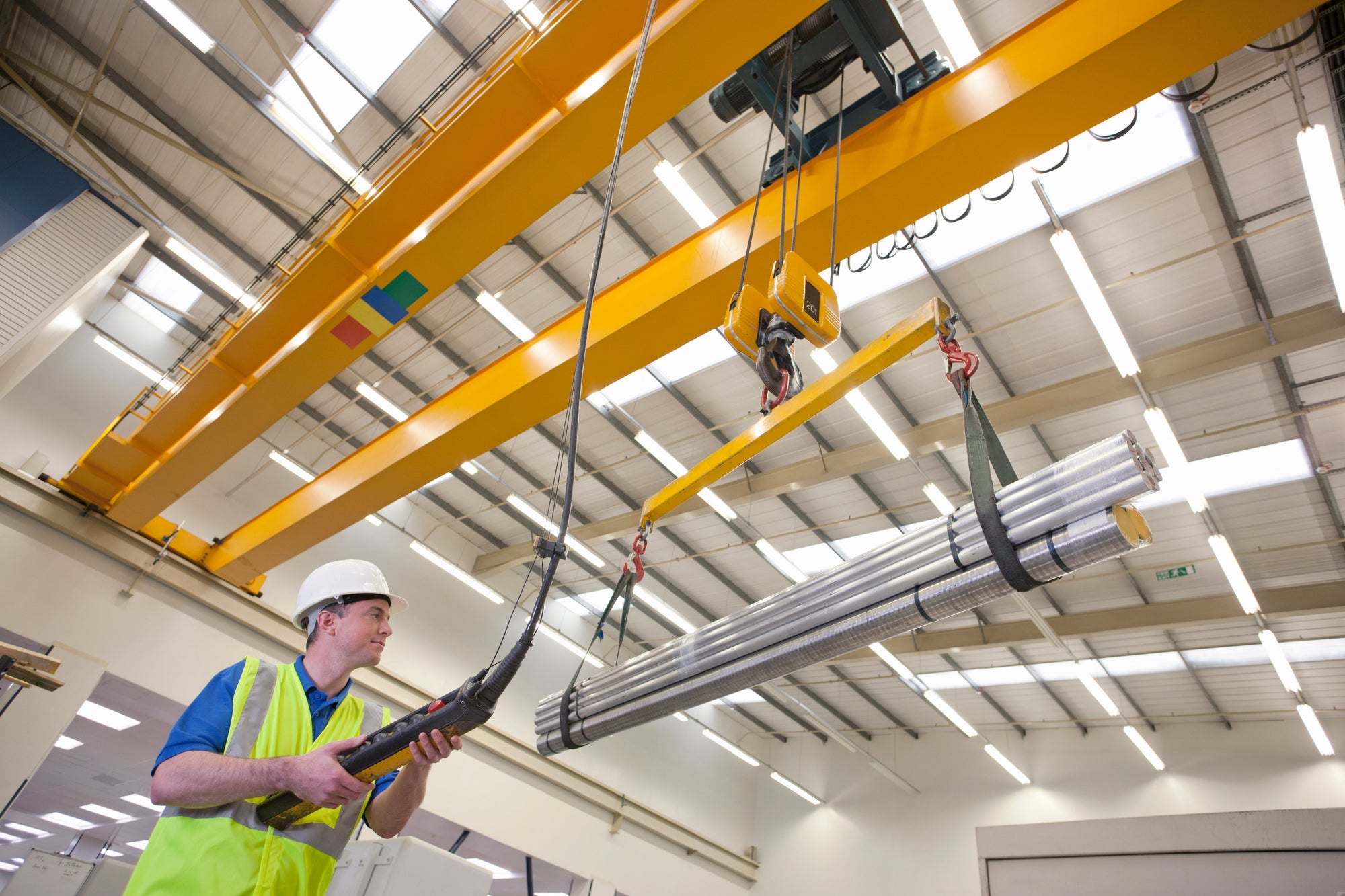
Variable frequency drives have become thestandard control technology on new overhead cranes. Yet thousands of older cranes still run on two-speed contactor systems, burning through brake pads, wasting energy, and generating maintenance costs that compound year after year.
For facilities operating legacy crane controls, a VFD upgrade represents one of the highest-ROI modernization investments available, withillustrative ROI scenarios showing combined annual savings of $58,000 per crane across energy, productivity, and downtime reduction. With Section 232 tariffs now pushing new crane costs up by 40% or more, the case for upgrading existing equipment has never been stronger.
This guide breaks down exactly how variable frequency drives for overhead cranes reduce costs, what the data shows on payback timelines, and how to specify the right VFD for your application.
Table of Contents
-
How a Variable Frequency Drive Works on an Overhead Crane
-
Two-Speed Controls vs. VFD Controls: Head-to-Head Comparison
-
How VFDs Reduce Brake Wear and Maintenance Costs
-
Energy Savings and ROI: What the Data Shows
-
Crane-Specific VFDs vs. General-Purpose Drives
-
Regenerative Braking: Resistors vs. Regen Units
-
VFDs as the Foundation for Smart Crane Technology
-
Why the 2026 Tariff Environment Strengthens the VFD Upgrade Case
-
What to Expect from a VFD Retrofit
-
Key Takeaways
How a Variab le Frequency Drive Works on an Overhead Crane
A variable frequency drive controls an AC motor's speed by adjusting the frequency and voltage of the power it delivers. On an overhead crane, VFDs can be applied to any motorized motion: bridge travel, trolley travel, and hoist. Instead of the fixed-speed operation of traditional contactor controls, a VFD provides smooth, stepless speed adjustment from creep speed up to full travel.
The simplest way to understand the difference: contactor controls work like a light switch, delivering either full power or no power. A VFD works like a dimmer,adjusting both frequency and voltage to deliver precise speed control across the crane's full operating range. That precision has cascading effects on brake wear, energy consumption, load control, and structural stress throughout the crane system.
On the hoist motion specifically, VFDs manage both lifting and lowering speeds with controlled acceleration and deceleration ramps. This means the mechanical brake no longer does the work of slowing the load. Instead, the VFD decelerates the motor electrically, and the brake engages only as a holding device once the motion has stopped.
Two-Speed Controls vs. VFD Controls: Head-to-Head Comparison
The performance gap between legacy two-speed contactors and modern VFD controls is significant across every measurable dimension. The table below summarizes the key differences based on industry data.
|
Performance Dimension |
Two-Speed Contactor |
Variable Frequency Drive |
|
Speed ratio |
Two fixed speeds (typically 3:1 to 4:1) |
10:1 with stepless variability |
|
Acceleration/deceleration |
Abrupt start and stop |
Programmable ramp-up and ramp-down |
|
Inrush current |
6-8x rated motor current |
|
|
Brake wear |
Frequent replacement on high-duty cranes |
|
|
Energy efficiency |
Full power at all times |
|
|
Load sway |
Significant due to abrupt speed changes |
Minimal with controlled ramping |
|
Component stress |
High impact on drivetrain, wheels, runway |
Reduced mechanical stress across all components |
|
Motor heating |
Standard thermal stress |
Reduced motor heating |
|
Diagnostic capability |
None |
Built-in fault logging and monitoring |
|
Smart technology readiness |
Not compatible |
Foundation for IoT, anti-sway, automation |
For cranes operating more than a few cycles per day, the operational cost difference between these two control methods compounds rapidly.
How VFDs Reduce Brake Wear and Maintenance Costs
Brake wear reduction is the single most impactful benefit of a VFD upgrade on an overhead crane. The mechanism is straightforward: with contactor controls, the mechanical brake handles all deceleration and stopping forces. Every bridge travel stop, every trolley motion, every hoist lowering cycle grinds the brake pads. On busy cranes, this translates to brake replacements every few weeks or months.
With a VFD, the drive handles deceleration electronically. The motor ramps down at a controlled rate, and the brake engages only after motion has ceased. The brake becomes a parking brake, holding position rather than absorbing kinetic energy. Thissignificantly extends brake lifespan on high-duty cranes, where contactor-controlled brakes often require replacement every few weeks or months.
The benefits extend well beyond brakes. VFD-controlled acceleration and decelerationreduce mechanical stress throughout the crane structure, including drivetrain, couplings, gearboxes, end trucks, wheels, and runway supports. By eliminating the abrupt starts and stops that transmit shock loads through the system, VFDs extend the service life of the mechanical components that would otherwise bear the brunt of every cycle.
Consider the maintenance cost context: theU.S. Department of Energy documents reactive maintenance costing roughly $18 per horsepower per year compared to $13 for preventive programs and $9 for predictive ones. VFDs reduce the frequency and severity of unplanned failures, shifting maintenance spending from reactive emergency repairs toward predictable, planned service intervals.
Energy Savings and ROI: What the Data Shows
VFDs deliver measurable energy savings by matching motor output to actual load requirements. Instead of running at full power regardless of whether the crane is carrying 5 tons or 25 tons, the VFD adjusts power consumption to the work being performed. While crane applicationsdon't reach the 40% savings that fans and pumps achieve, documented reductions in real-world crane installations typically run in the 15 to 25 percent range depending on duty cycle and load variability.
Heavy industrial sectors see the most benefit from VFD retrofits because their high-duty-cycle cranes amplify every efficiency gain.ABB recently deployed more than 20 regenerative drives at India's largest integrated special alloy steel plant for slag-handling and coil-handling overhead cranes, feeding braking energy back to the network rather than wasting it as heat. Worth noting that energy savings alone don't typically justify a retrofit on their own; real ROI comes from bundling energy with reduced maintenance, less unplanned downtime, and improved throughput.
Regenerative braking adds another layer of savings. During load lowering and bridge deceleration, the motor generates energy that would otherwise be dissipated as heat through a braking resistor. Regenerative drives insteadreturn that energy to the building's power supply where other electrical loads can consume it.ABB documents one waste handling crane with a 55 kW hoist motor that achieved 15.6 MWh in annual savings after regenerative drives were installed, a 32 percent reduction in total energy consumption.
Payback periods for crane VFD retrofits depend heavily on duty cycle. For cranes running continuously,KEB America documents ROI under 18 months on 24/7 cold-storage operations; lower-duty applications take longer. But asABB's drive engineers point out, calculating ROI on energy savings alone is rarely practical for cranes. The fastest returns come from bundling energy gains with reduced maintenance, improved throughput, and safety improvements.
Crane-Specific VFDs vs. General-Purpose Drives
Not all VFDs are suited for crane applications, and specifying the wrong type creates real problems. General-purpose VFDs designed for fans, pumps, and conveyors lack features critical tosafe crane operation.
The most important difference is hoist load management. Crane-specific VFDs include DC braking circuits that hold the load magnetically before releasing the mechanical brake. This torque-proving sequence ensures the motor has positive control of the load before the brake opens. General-purpose drives skip this step, and the consequences can be severe. Inone firsthand account on an engineering forum, an engineer described a 40-ton overhead crane running on a general-purpose VFD that experienced rapid brake wear and loads that fell multiple times because the drive could not hold the weight during brake transitions.
Crane-specific VFDs also include otherfeatures designed for lifting applications: Safe Torque Off, brake test capabilities, electronic programmable limit switches, and adaptive lifting functions like Ultra-Lift that monitor motor torque and adjust speed to prevent overload.
CMAA Specification 70 (Crane Manufacturers Association of America) defines six duty classifications from Class A (standby/infrequent) through Class F (continuous severe). The VFD must be specified to match the crane's duty class. A Class D crane running 10 to 20 lifts per hour, or a Class E crane running 20 or more, needs a drive rated for that continuous duty, not a general-purpose unit rated for steady-state fan operation.
When specifying a VFD retrofit, also confirm motor compatibility. NEMA MG1 Part 31 defines requirements forinverter-duty motors, including insulation systems rated for 1,600V peak voltage spikes at 0.1 microsecond rise times. Standard motors under Part 30 are rated for only 1,000V peak at slower rise times. For installations with motor lead lengths beyond 100-150 feet, Part 31 compliant motors are strongly recommended to prevent insulation damage.
Regenerative Braking: Resistors vs. Regen Units
Every time a VFD-controlled crane lowers a load or decelerates, the motor acts as a generator, producing energy that flows back into the drive. That energy has to go somewhere. There aretwo approaches.
Dynamic braking with resistors routes the regenerated energy through a braking resistor, which dissipates it as heat. This is the simpler and less expensive option. It works well for cranes with lower duty cycles or shorter peak braking loads. The downside is wasted energy and heat generation in the electrical enclosure.
True regenerative systems convert the energy back to AC power and return it to the building's electrical supply. These units cost more upfront but pay for themselves on high-duty cranes that generate significant regenerative energy. KEB America's regen units are rated for continuous duty, making them the better fit for cranes and hoists that cycle frequently.
The decision depends on duty cycle and energy volume. A Class C crane running occasional cycles does fine with resistor braking. A Class E or F crane lowering heavy loads dozens of times per shift generates enough energy to justify the regen investment, especially as electricity costs rise.
VFDs as the Foundation for Smart Crane Technology
A VFD upgrade does more than improve motor control. It installs the electronic foundation that enables every major smart crane technology on the market today.
VFD-based anti-sway systems reduce payload swing by 85 to 95 percent during travel and positioning. By calculating the natural pendulum frequency of the suspended load and adjusting acceleration profiles in real time, these systems eliminate the operator skill gap that causes slow cycle times and safety incidents. Hundreds of operator studies documented by PAR Systems show cycle time improvements of 10 to 40 percent when anti-sway is enabled.Danfoss reports that their sensorless anti-sway control, built into the VFD software, improves crane productivity by 10 to 15 percent.
VFDs also provide the data layer for remote monitoring and predictive maintenance. Modern crane-rated drives log motor current, voltage, fault codes, and operating hours. Cloud-connected platforms like Columbus McKinnon'sIntelli-Connect Mobile+ pull this data from Magnetek VFDs for real-time asset monitoring and predictive analytics, including continuous trending and visibility into remaining hoist operating life.
As the industry moves toward semi-automated and fully automated crane operations, VFDs are the baseline requirement. Automation features like anti-sway control, predictive maintenance, collision avoidance, and cloud-based monitoring all depend on the real-time motor control data that only a VFD can provide. Every layer of the smart crane technology stack depends on variable-speed drive control.
Why the 2026 Tariff Environment Strengthens the VFD Upgrade Case
TheSection 232 tariffs restructured in April 2026 impose a 50 percent additional tariff on steel, aluminum, and copper products, a 25 percent tariff on derivative products substantially made of those metals, and a temporary 15 percent minimum on certain metal-intensive industrial equipment through December 31, 2027. Duties are now calculated on the entire product value, not just the metal content. For plants weighing a VFD retrofit against imported new equipment, the tariff math increasingly favors domestic integration of existing cranes.
In themobile crane sector, the impact has been severe. One U.S. mobile crane company canceled four orders worth $12.5 million after tariff-adjusted costs reached $17.5 million, a 40 percent increase. All-terrain mobile cranes are overwhelmingly imported from Germany and Japan, and the specialty high-tensile steels required for their telescoping booms aren't produced domestically. Overhead cranes face a different picture. Domestic manufacturing and integration capacity is substantial, and the structural steels used in bridge construction are readily available from U.S. mills, insulating existing cranes and retrofits from the worst of the tariff exposure.
This pricing reality is pushing more facilities toward modernizing existing cranes rather than buying new ones.Columbus McKinnon estimates that rebuilding and modernizing existing assets with modern controls saves 30 to 40 percent compared to buying new equipment, and a VFD upgrade is among the most cost-effective modernization investments within that range. For facilities that might have considered a new crane a year ago, a VFD retrofit now delivers comparable performance improvement at a fraction of the tariff-inflated price.
What to Expect from a VFD Retrofit
A VFD retrofit on an existing overhead crane follows a defined process. It begins with an engineering assessment of the crane's current electrical system, motor specifications, duty cycle, and operational requirements. The assessment determines whether existing motors can accept VFD power or need to be upgraded to inverter-duty rated units perNEMA MG1 Part 31.
OSHA 1910.179 governs overhead crane motor controls and braking systems. Any VFD installation must maintain compliance with these requirements, including proper braking capability for the rated load. Non-compliance carries penalties of $16,550 per serious violation and up to $165,514 forwillful offenses.
After specification and procurement, installation typically involves mounting the VFD panel, running new wiring to the motors, programming drive parameters for the specific crane application, and commissioning with load testing. Operator training is part of the process: VFD-equipped cranes respond differently than contactor-controlled cranes, and operators need to learn the smooth acceleration characteristics and speed range available to them.
Key Takeaways
Variable frequency drives for overhead cranes deliver documented improvements across every operational cost category. Modern VFDs significantly extend brake lifespan by shifting primary stopping force from friction to electrical regeneration. Energy consumption in crane applications typically drops 15 to 25 percent, with real-world installations like ABB's waste-handling case documenting 32 percent reductions and 15.6 MWh in annual savings. Anti-sway control built into modern drives reduces payload swing by 85 to 95 percent and improves cycle time by 10 to 40 percent.
Payback depends heavily on duty cycle. Continuous operations can see returns in under 18 months; lower-duty applications take longer. As ABB's drive engineers note, calculating return on energy savings alone is rarely practical for cranes. The strongest business case bundles energy gains with reduced maintenance, improved throughput, and safety improvements, and the current tariff environment makes upgrading existing cranes significantly more attractive than purchasing new ones.
The critical specification decision is choosing a crane-rated VFD rather than a general-purpose drive, and matching the drive to your crane's CMAA duty classification. Get that right, and a VFD retrofit is one of the most reliable investments a facility can make in its overhead crane fleet.
If you are evaluating a VFD upgrade or broader crane modernization, HOJ Innovations offers complimentary 3D Strategic Planning consultations to assess your current equipment and identify the highest-impact improvements for your operation.