
Your Cart is Empty







Long-Span Overhead Crane: Greenfield Planning Guide 2026

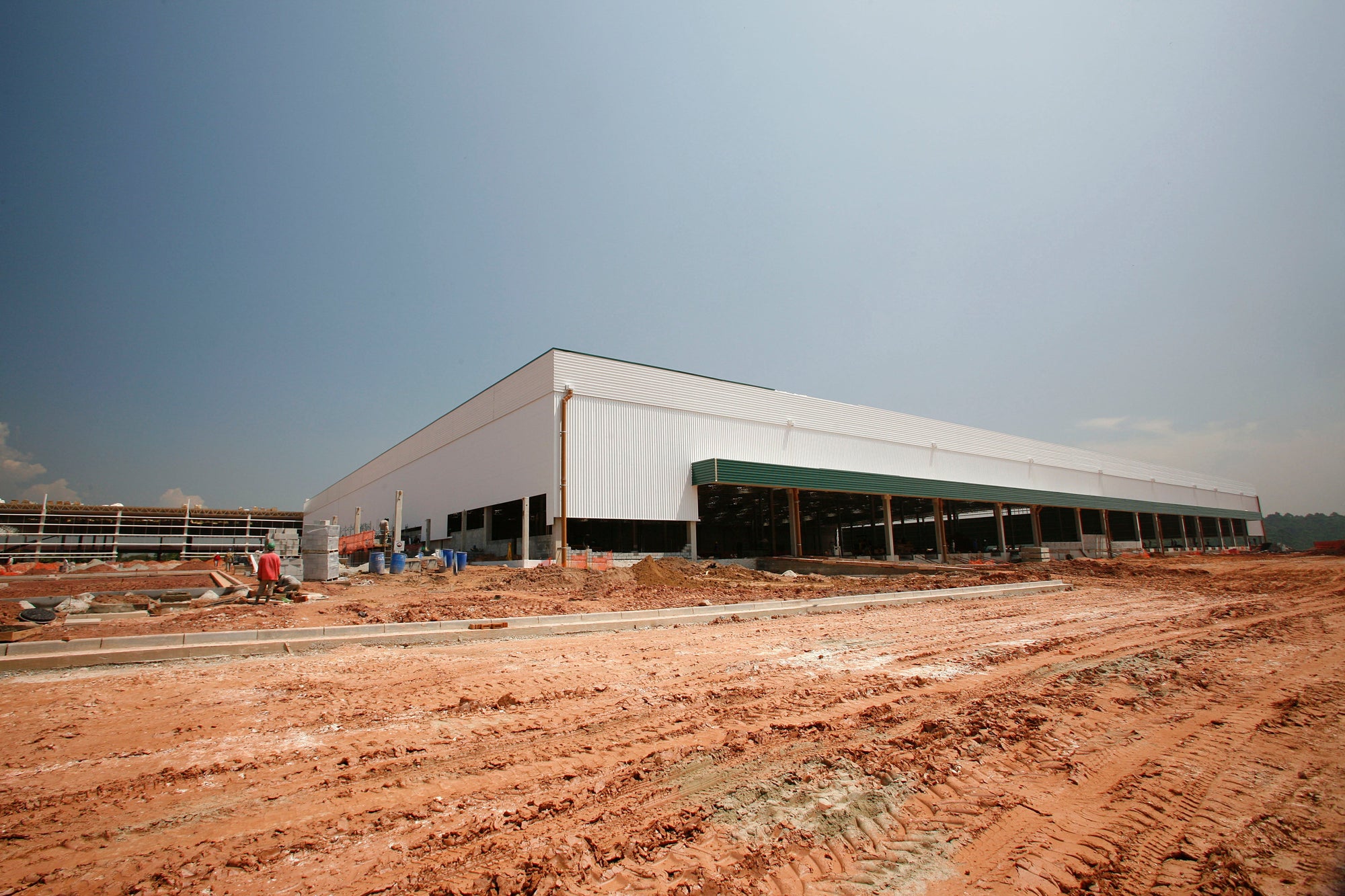
The reshoring wave reached installed-capacity in 2026, and long-span overhead crane planning is now a recurring procurement decision on every greenfield factory.
TheIndustrialSage investment tracker has logged roughly $1.66 trillion in announced U.S. manufacturing investment since January 2025 across 131 companies and 32 states, and theReshoring Initiative report counts 244,000 reshoring and FDI manufacturing jobs announced in 2024 alone.
Get span, deflection, runway, and structural integration right at the spec stage and the system carries the facility for 30 years. Get it wrong, and the building gets retrofitted to fit the crane.
Four Decisions Drive Cost
Span, rated capacity, runway integration, and bridge configuration interact as a single system, and a change to any one cascades to the other three. Every defensible 2026 spec anchors to theCMAA 70-2025 revision, which expands plate-box girder and fatigue content, revises hoist light-load overspeed protection, and updates language on PLC integration, tandem-crane coordination, and anti-sway control. AISC Design Guide 7 (3rd ed., 2019) governs the runway and fatigue side.
Table of Contents
-
Four Decisions Drive Cost
-
Bridge Girder and Runway Deflection
-
Single Girder Versus Double Girder
-
Runway Tolerances, Clearances, and Fatigue
-
Multi-Section Fabrication Above 120 Feet
-
Semiconductor and Cleanroom Spec
-
Lead Times and Procurement Timing
-
Make the Decision Once
Bridge Girder and Runway Deflection
CMAA 70 sets one vertical deflection limit for the bridge girder, and it does not scale with service class. PerCMAA 70 clause 3.5.5.1, vertical deflection produced by hoist, trolley, and rated load shall not exceed 1/888 of span. On a 120-foot girder, that is 1.62 inches at full rated load.
Runway beam deflection is a separate framework guided by AISC Design Guide 7 and scales with CMAA service class. Lateral deflection on the runway is capped at L/400 based on 10 percent of maximum wheel load.
|
CMAA Service Class |
Runway Beam Vertical Deflection |
|
A, B (standby/light) |
L/600 |
|
C (moderate) |
L/600 to L/800 |
|
D (heavy) |
L/800 to L/1000 |
|
E, F (severe/continuous) |
L/1000 or stricter |
Hoist load factor per CMAA 70 is 0.5 percent of hoisting speed in feet per minute, with a 15 percent floor and a 50 percent ceiling on rated capacity. Bucket and magnet cranes use a fixed 50 percent impact. ASCE 7 Section 4.9 adds a 25 percent vertical wheel-load increase for runway-beam impact on cab and pendant-operated cranes, andAISC LRFD practice excludes that impact from column design.
Single Girder Versus Double Girder
The single-girder to double-girder break is the largest cost decision in long-span planning. Above roughly 60 feet of span or 15 tons of capacity, double-girder top-running takes over because the dual girders distribute bending more efficiently and support longer spans without proportionally heavier steel. Engineered top-running double-girder cranes routinely run to 150 feet of span and 100 tons of capacity. If the rated lift exceeds 20 tons or duty falls in CMAA Class D, E, or F, plan double-girder from day one, because fatigue design becomes governing rather than recommended.
Runway Tolerances, Clearances, and Fatigue
CMAA Table 1.4.2.1 sets runway rail tolerances that long-span buildings rarely hit without a coordinated column survey plan: 3/8 inch overall elevation and straightness, 1/4 inch per 20-foot rate-of-change, and rail-to-rail elevation tightening from 3/16 inch at spans under 50 feet to 3/8 inch above 100 feet.
OSHA 1910.179(b)(6) requires a minimum 3 inches overhead and 2 inches lateral clearance between the crane and any obstruction, not just at runway ends. Section (k)(1) requires a rated load test before any new or altered crane goes into service, and (k)(2) caps that test at 125 percent of rated capacity.
Fatigue design controls the runway-girder details.AISC fatigue provisions place bolted attachments to the girder web in Category B, while fillet-welded attachments jump to Category D or E depending on detail. Top flange-to-web welds, bearing stiffener-to-top-flange welds, and intermediate stiffener terminations near the tension flange are the high-risk locations to scrutinize during shop drawing review.
Multi-Section Fabrication Above 120 Feet
Crane girders above 120 to 140 feet routinely require at least one bolted field splice. Web stiffeners or reinforcing plates resist localized deformation at the joint, and the splice must carry the full bending strength of the uncut girder.FHWA oversize permits define the legal envelope that drives section count: 8 feet 6 inches maximum vehicle width on the federal interstate system, with height limits set state by state, typically 13 feet 6 inches. Anything wider, taller, or longer needs a state-issued oversize permit, and most states require pilot vehicles or escorts above certain thresholds.
The 2026 anchor example:HOJ engineered crane delivered a 126-foot span, 40-ton top-riding double-girder bridge crane for a Utah warehouse, with manufacturing announced in November 2025 and shipping in February 2026 in four girder sections across four truckloads.
Semiconductor and Cleanroom Spec
Semiconductor fab cranes add six to twelve months to the procurement cycle.ISO 14644-1 classification ranks cleanrooms by airborne particle concentration on a 1-to-9 scale, with lower numbers being more stringent.
Most fab production runs at ISO Class 4 to 6, with ISO Class 3 for front-end fab areas and ISO Class 1 reserved for EUV lithography. Fab cranes require oil-free or sealed lubrication, stainless housings, sealed electrical enclosures, ESD-compatible coatings, and ULPA filtration. Build that finish spec into the structural design, not as a finish-trade change order later.
Lead Times and Procurement Timing
Standard overhead crane lead times run 6 to 14 weeks. Heavy-duty long-span double-girder cranes run 16 to 24 weeks for hardware alone, with another 1 to 4 weeks for engineering and drawing approval. Add DOT permitting, oversize transport, installation, commissioning, and the 125 percent proof load test, and a realistic greenfield end-to-end timeline runs 26 to 52 weeks.
Demand is large and capacity is constrained. Material handling OEMColumbus McKinnon reported record fiscal 2025 orders of $1.0 billion with backlog up 15 percent year over year, and CEO David Wilson cited "on-shoring, scarcity of labor and global infrastructure investments" as the megatrends driving demand. By Q1 fiscal 2026, the company's backlog had grown another 23 percent year over year to $360 million. The order pipeline reflects the broader reshoring wave: project-related orders, which carry longer delivery timeframes than short-cycle work, are leading the growth. Buyers who specify late lose their delivery slot.
The highest-leverage decision is timing. Bring the crane spec into the project before the building's structural steel is detailed, not after. Wheel loads, impact factors, and tie-bracing dictate column placement and runway corbel design. A crane spec written after the building drawings are released forces a reinforcement retrofit somewhere, and that reinforcement costs more than the original detail.
Make the Decision Once
CMAA 70-2025, AISC Design Guide 7, and OSHA 1910.179 give every project engineer the design loadings, deflection limits, fatigue categories, runway tolerances, clearance minimums, and proof-load procedure needed to spec a long-span overhead crane correctly the first time.
HOJ Innovations partners with project engineers and plant managers to plan long-span cranes alongside the building. The complimentary 3D Strategic Planning consultation maps span, capacity, runway, and column placement before structural drawings get released, which is the lowest-cost moment to make every decision in this article.