

Your Cart is Empty





Warehouse Conveyor Systems
Move product faster, cut the touch points it takes to get an order out the door, and run it all on the WMS and equipment you already have. We design, engineer, and install the system that gets you there.
Warehouse Conveyor Systems
Move product faster, cut the touch points it takes to get an order out the door, and run it all on the WMS and equipment you already have.
We design, engineer, and install the system that gets you there.
Engineered
In-House
Built Around Your Operation
Integrated With Your WMS
Types of Warehouse Conveyor & Systems We Install
Loading & Unloading Systems
Case Conveyor Systems
Pallet Conveyor
Returns Management Systems
Accumulation Conveyors
Food Grade Conveyors
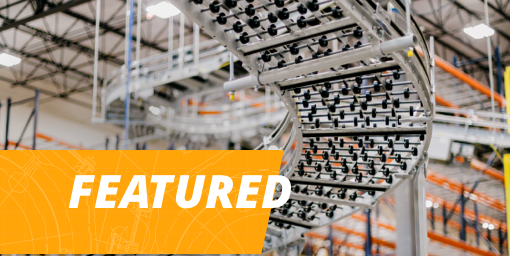
Spiral Conveyor
Conveyor Maintenance
Custom / Other
Throughput Drops, Costs Climb
When your conveyor system isn't right for your operation, the whole floor feels it.
-
Your pick rate stalls because pickers walk too far between zones
-
The WMS, sortation, and controls don't talk, so you sort manually, driving up errors and labor
-
Returns pile up because no one engineered the reverse flow
-
Labor costs climb as every bottleneck adds another touch
A Conveyor Partner That Engineers In-House
Most integrators design the conveyor and hand the controls to someone else.
We engineer both in-house as one turnkey system. Your WMS, controls, and sortation get programmed together, so every package routes right without anyone moving it by hand.
Controls are where conveyor projects succeed or fail, and we don't outsource them.
Testimonials
The Cost of Getting Conveyor Wrong
The wrong conveyor system can cost you hundreds of thousands of dollars.
Once it's installed, fixing it means tearing it out.
Bad integration means packages stall, sortation misroutes, and pick rates drop.
Where Your Operation Could Be
Cases move from receiving to pick zones on their own. Pickers stay put and hit peak rates because the work comes to them.
Pallets reach the dock as the truck arrives. Returns flow back on the same loop instead of piling up.
WMS and controls stay in sync, so every package routes itself.
How We Build Your Conveyor System
Analyze Your Bottleneck
Walk us through your floor, your throughput targets, and where product gets stuck.
We listen first, then ask the engineering questions.
Deploy
Our in-house team lays out the system with you and integrates our controls with your WMS.
You get a buildable plan and a ballpark to confirm the project pencils out.
Install, Integrate, Run
We install, integrate with your software and existing equipment, train your team, and support it after launch.
Get a Conveyor System Designed for Your Floor
50 YEARS OF EXPERIENCE
OSHA STANDARD PRODUCTS
CUSTOM BUILT & FABRICATED
Tell us about your operation and an HOJ engineer will reach out to set up a call.
We'll talk through your throughput goals and where your floor slows down today, then figure out whether conveyor is the right move and what the next step looks like.
FAQs
What is a warehouse conveyor system?
A warehouse conveyor system is an engineered network of belts, rollers, chains, or motorized components that moves product across the floor with little manual handling.
It links receiving, storage, picking, packing, and shipping into one continuous flow, usually integrated with a warehouse management system (WMS) and control software that route cases, totes, and pallets to the right destination.
Most production warehouses combine several conveyor types into one coordinated system.
What are the main types of warehouse conveyor systems?
The main types are belt, roller, chain, pallet, spiral, accumulation, sortation, and returns processing. Belt and roller conveyors move cases and totes through pick and pack zones, while chain and pallet conveyors handle heavy loads like full pallets and drums. Spiral conveyors move product between floors to save footprint, accumulation conveyors queue product without back-pressure, and sortation systems divert packages to specific lanes or dock doors. Most operations combine several into one engineered solution.
How do warehouse conveyor systems work?
Warehouse conveyor systems move product along a fixed path using motorized or gravity-driven sections, while a control system tracks each item and routes it.
Scanners, photo eyes, and barcode readers identify items along the line, and a warehouse control system (WCS) or PLC layer running on Beckhoff or Allen Bradley reads instructions from your WMS or ERP, then activates diverts, merges, and accumulation zones.
Power comes from motor-driven belts, motorized drive rollers (MDR), or chains, depending on load and speed.
How much does a warehouse conveyor system cost?
Warehouse conveyor cost ranges from a few thousand dollars for a short gravity roller section to multi-million-dollar systems for full distribution centers. The conveyor steel itself is only about half the project, roughly 48 percent.
Controls typically run 35 percent, installation 11 percent, and engineering and project management 6 percent. Most people are surprised by how much of the cost lives in controls, not steel.
Full fulfillment center systems usually land in the six to seven figure range, and the biggest cost driver is engineering and controls, not the conveyor.
Used conveyor can save around 15 percent at best, but you give up the warranty and inherit a system with limited life left, since conveyor has only so many revolutions before it fails.
How do I choose the right conveyor system for my warehouse?
Start with your throughput targets, product mix, and software stack.
Map every product type you handle (weight, dimensions, fragility), your peak hourly volume, your facility constraints (ceiling height, footprint, columns), and how the system needs to integrate with your WMS, AMRs, and palletizers.
From there, an engineer specifies the right combination of belt, roller, accumulation, sortation, and controls. Buying from a catalog before doing the engineering is how operators end up with mismatched spending.
How do conveyor systems integrate with a WMS?
Conveyor systems integrate with a WMS through a control layer, usually a warehouse control system (WCS) or PLCs running on platforms like Beckhoff or Allen Bradley.
The WMS sends order data and routing instructions to the WCS, which drives the motors, diverts, scanners, and sortation logic in real time.
Done right, every package is tracked from receiving through shipping without manual routing. Done wrong, packages stall at diverts and misroute at sortation.
What is the difference between accumulation and sortation conveyors?
Accumulation conveyors stage and queue product in a single line without back-pressure, while sortation conveyors divert product to multiple destinations.
Accumulation releases items two ways: singulation release sends one item at a time, and slug release sends the full queue together when downstream is ready.
Sortation reads a barcode or RFID tag and pushes, lifts, or shifts the item onto the correct lane, dock door, or zone. Most fulfillment operations use both, with accumulation feeding sortation.
How long does it take to install a warehouse conveyor system?
Timelines run from a few days for small additions to a few months for large engineered systems.
A simple gravity roller line for one zone installs in days, while a powered case conveyor with controls and WMS integration takes several weeks to a few months including engineering and commissioning.
Even full distribution center systems with sortation, accumulation, and robotics are scoped to install in months, not years. Engineering and controls programming, not steel, drive the timeline.
Can conveyor systems handle returns processing?
Yes, conveyor systems can be engineered specifically for returns, which matters for ecommerce operations where returns run 20 to 30 percent and climb higher in apparel.
A returns system routes product through inspection, then stages it for restock, repackaging, or disposal based on the inspector's classification.
The same engineering rigor as outbound applies: throughput targets, WMS integration, accumulation zones, and clear handoffs to AMRs or putaway operators.
Handling returns on an engineered loop instead of a pile in the corner is what separates a fulfillment operation from a backlog.
Who installs warehouse conveyor systems?
Warehouse conveyor systems are installed by material handling integrators who design, fabricate, install, and commission the full system rather than reselling components.
The best integrators have in-house engineering teams, established partnerships with manufacturers like Hytrol, Intralox, Interroll, Itoh-Denki, Ryson, Nercon, and Span Tech, and the ability to integrate with your WMS, controls, and AMRs.
HOJ has engineered and installed warehouse material handling since 1964, with projects ranging from $5,000 parts replacements to multi-million-dollar automation.
READY TO GET STARTED?
REACH OUT TO US TODAY
Whether it’s a project, product, repair or service, let’s chat to see if we can make your warehouse operations more efficient.
READY TO GET STARTED?
REACH OUT TO US TODAY
Whether it’s a project, product, repair or service, let’s chat to see if we can make your warehouse operations more efficient.