
Your Cart is Empty







Crane Hook Inspection per ASME B30.10: Removal Criteria, NDT, and Field Checklist

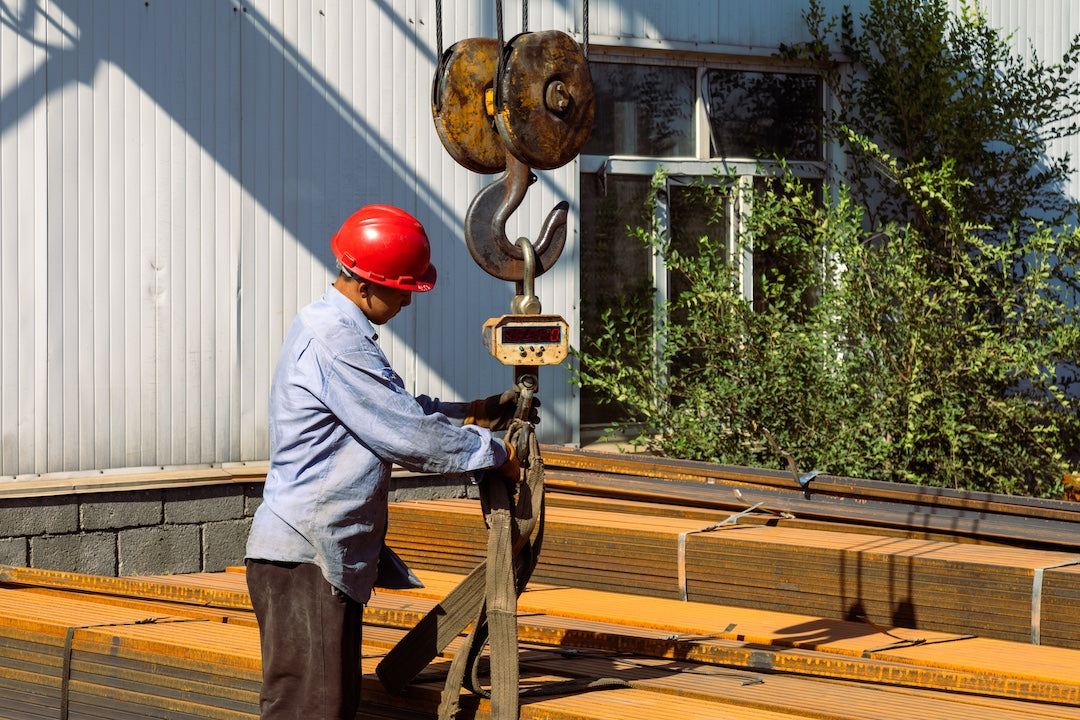
The U.S.Bureau of Labor Statistics recorded 297crane-related fatalities from 2011 through 2017, averaging 42 per year. About 27% of those workers, 79 in total, were struck by an object that fell from or was put in motion by a crane. On March 31, 2026, a 55-year-old worker at S&S International in Carol Stream, Illinois died when a roughly 48,000-pound aluminum spool fell from an overhead crane during flatbed loading, perCarol Stream reporting.
A documentedhook fatigue analysis of a 24-ton crane hook traced the final fracture to cracks initiating at tool marks years before failure, the kind of defect a structured ASME B30.10 program detects long before release. The currentASME B30.10-2024 edition revised the hook marking provisions to require manufacturer identification. The four removal criteria are unchanged from 2019.
Table of Contents
-
The Four Removal Criteria
-
ASME B30.10 vs. OSHA 1910.179
-
Inspection Cadence
-
When NDT Is Required
-
Repair, Heat, and Corrosion
-
Field Inspection Checklist
-
A Defensible Program
The Four Removal Criteria
Throat opening. Remove the hook when distortion increases throat opening more than5%, not to exceed 1/4 inch (6 mm), or per the manufacturer. Measure across the narrowest point perpendicular to the hook centerline against the original stamped dimension. The 5% rule is the most commonly missed criterion because plants only check throat opening when a hook looks bent.
Twist. ASME requires removal for any visibly apparent bend or twist from the plane of the unbent hook.OSHA 1910.179 sets a more permissive threshold of more than 10 degrees. Use a straightedge or angle gauge; visual estimation alone produces false negatives.
Wear. Remove when wear exceeds 10% of the original section dimension of the hook or its load pin, or per manufacturer recommendation. Measure at the load-bearing curvature on the inside radius of the bowl.
Cracks, nicks, and gouges. Any visible crack is grounds for immediate removal. As afield rule of thumb, a nick or gouge deep enough to catch a fingernail is cause for removal pending evaluation by a Qualified Person. Welding, heating, burning, and bending are prohibited unless authorized by the manufacturer.
ASME B30.10 vs. OSHA 1910.179
|
Criterion |
ASME B30.10-2024 |
OSHA 1910.179 |
|
Throat opening increase |
More than 5%, not to exceed 1/4" (6 mm) |
More than 15% in excess of normal |
|
Twist from unbent plane |
Any visibly apparent bend or twist |
More than 10 degrees |
|
Wear of original cross-section |
More than 10% |
Not Specified |
|
Cracks |
Any visible crack |
Any crack |
|
Repair restrictions |
Longitudinal grinding only, up to 10% reduction |
Welding not recommended; if performed, requires competent supervision and 125% load test. |
ASME B30.10 is the more conservative standard. A hook that passes ASME also passes OSHA; the reverse is not true. Most U.S. third-party inspectors test against ASME, so plants aligned to ASME avoid contractor-side findings on otherwise compliant equipment.
Inspection Cadence
The ASME B30.10 framework defines three inspection categories.Initial inspection happens before any new, altered, or repaired hook enters service, with no written-record requirement.Frequent inspections are visual checks by a Designated Person before each shift or daily, also unrecorded.Periodic inspections are documented examinations at a minimum 12-month interval, retained as written records, unless a Qualified Person sets a tighter interval.
CMAA duty classifications drive cadence. Class A standby and Class B light service run on monthly frequent and annual periodic schedules. Class D heavy service, Class E severe service (bucket and magnet, scrap yards, cement mills with 20 or more lifts per hour), and Class F continuous severe service should receive quarterly to semi-annual periodic re-inspection.
CMAA Specification 78-2025 expanded the personnel framework, separating maintenance and inspection roles, with minimum experience levels and competency validation now defined for each. When evaluating a third-party vendor, ask for evidence the inspectors meet that framework.
When NDT Is Required
ASME B30.10 requires NDT when the Designated Person determines it necessary, and specifically recommends NDT on hooks under heavy or severe service or pulsating loads. A Class D, E, or F hook with a pulsating load profile or prior crack history that skips NDT will not survive a post-incident audit.
Magnetic particle testing detects surface and slightly subsurface flaws on ferromagnetic hook bodies, shanks, and threads per ASTM E709 and E1444. Testing must run in two perpendicular directions. AC and permanent magnet yokes must demonstrate at least 10 lb (4.5 kg) lifting force at 2 to 6 inch pole spacing; DC yokes must demonstrate 30 lb (13.5 kg) at 2 to 4 inch spacing or 50 lb (22.5 kg) at 4 to 6 inch spacing. MPT is the default for forged steel hooks because it is fast, sensitive to fatigue cracks, and runs with the hook on the crane.
Liquid penetrant inspection detects surface-breaking flaws on non-porous materials, including non-ferromagnetic hooks where MPT is not effective, following ASTM E165/E165M. Ultrasonic testing is the right call when a hook has documented overload history, suspected internal inclusions, or a forensic need after a near-miss.
Repair, Heat, and Corrosion
Per ASME B30.10 and theOSHA reconditioning letter, welding, heating, burning, and bending repairs are prohibited unless authorized by the manufacturer and supervised by a Qualified Person. Authorized weld build-up cannot exceed 15% of original cross-sectional area, must be ultrasonically inspected, and the hook must be normalized, heat-treated, and tempered. New or extensively repaired hooks should be proof-tested at 200% of rated load; OSHA caps general crane test loads at 125% of rated load unless the manufacturer specifies otherwise.
Discoloration consistent with blueing or tempering colors indicates overheating; remove the hook. Consult the manufacturer before using a hook above 400°F (204°C) or below -40°F (-40°C). ASME B30.10 and OSHA 1910.179 require removal for severe corrosion or pitting that reduces cross-section or creates deep pits acting as crack starters.
Field Inspection Checklist
Frequent (each shift, no records required): visual check for cracks, deformation, or discoloration; latch opens, closes, and seats; throat opening visual; twist visual against the shank; corrosion, pitting, and chemical damage.
Periodic (12-month minimum, written records required):
-
Throat opening measured against original; flag if more than 5% or 1/4" (6 mm).
-
Wear measured at bowl inside radius and load pin; flag if more than 10% reduction at any point.
-
Twist measured with straightedge or angle gauge; flag any visible deviation.
-
Crack and surface-defect inspection of body, shank, threads, andretention hardware; any nick or gouge that catches a fingernail flagged for Qualified Person evaluation.
-
NDT decision: MPT or LP on shank, threads, and retention hardware for heavy or severe service or pulsating loads.
-
Latch geometry and retention pin condition.
-
Manufacturer identification markings legible per ASME B30.10-2024.
-
Documentation: inspector name, date, hook serial, measurements, deficiencies, return-to-service signature.
A Defensible Program
A structured ASME B30.10 hook inspection program eliminates one of the most common audit findings before the inspector arrives. Plants that integrate frequent and periodic inspections into a CMMS, document measurements against original dimensions, and apply the CMAA 78-2025 personnel framework to vendor selection move past basic compliance toward genuine defensibility.
For facilities scoping a complete material-handling review, reach out to HOJ Innovations and one of our Engineers will be happy to assist.