
Your Cart is Empty








How Minky Couture Scaled Self-Fulfillment with Warehouse OS | The Warehouse Floor Ep. 7


When Sandy Hendry walked into universities with plans to manufacture and import blankets under one brand, she was told it could not be done. Today, Minky Couture ships thousands of orders a day from two Utah warehouses, runs a retail store network, operates an in-home seamstress program, and keeps a full customer service team under the same roof as corporate and fulfillment.
Jamie Lewandowski joined Minky Couture as a store associate roughly 15 years ago. She is now Director of Inventory Control. In a recent Warehouse Floor podcast conversation with Tim Hoj, CEO of HOJ Innovations, she walked through how the company grew out of self-storage units and Google Sheets into a scaled self-fulfillment operation powered by Warehouse OS.
This is a practical look at the decisions, tradeoffs, and process discipline that made it possible.
Table of Contents
- From Sheets to Scale
- Why Self-Fulfillment Won
- Choosing a WMS Partner
- The Touchscreen Advantage
- Culture as Competitive Edge
- Omni-channel Order Routing
- KPIs Done Right
- Solving Inventory Problems
- The Optimization Window
- Advice for Growing Brands
- Conclusion
- Frequently Asked Questions
From Sheets to Scale
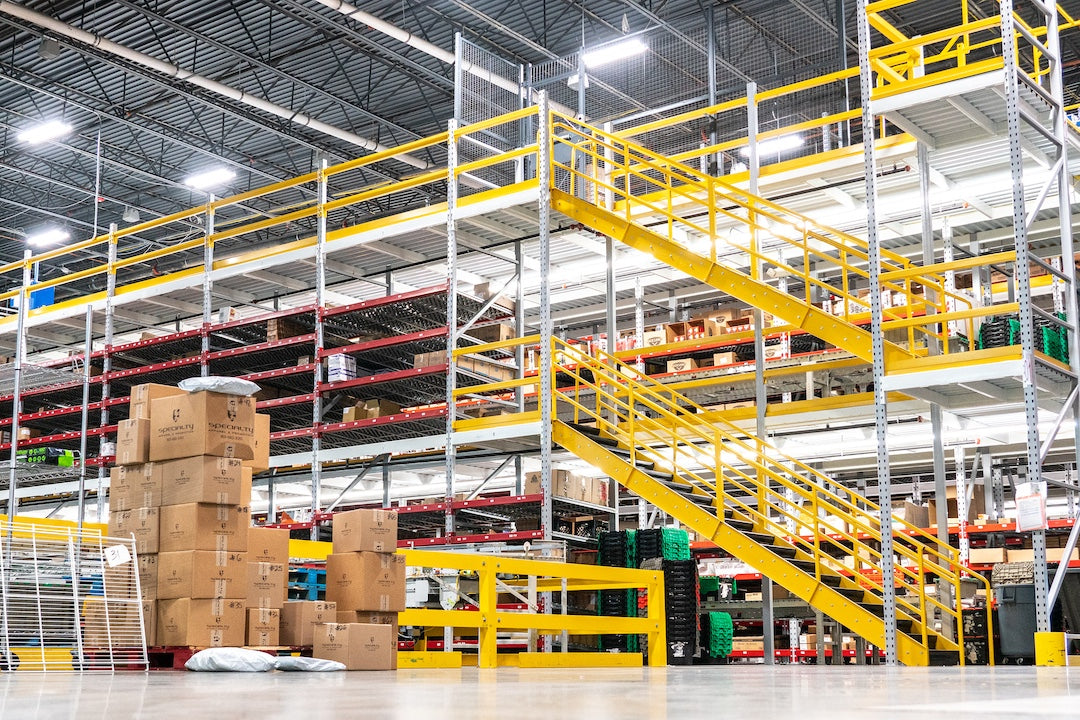
Minky Couture's first warehouse was a cluster of self-storage sheds. Inventory arrived one semi-truck at a time, was transferred into smaller trucks, and dropped into storage units identified by letters like H and J. Inventory tracking lived in Google Sheets.
Store orders flowed through a wish-list process. Store managers requested what they wanted, and Jamie picked from whatever inventory she could locate. Jamie described it as shopping their own Google Sheet.
The breaking point arrived during a Christmas season. The team was manually typing every single shipping order and working through stacks that would not clear. Jamie recognized that without a real system, the business would not survive its own growth.
Why Self-Fulfillment Won
Most growing brands outsource fulfillment to a third-party logistics partner and hope it goes well. Minky Couture chose the harder path of running its own operation, and that decision came directly from how seriously the founder treats the product experience.
At one point every blanket was being hand-packaged with a handwritten note. As volumes climbed past thousands of orders per day, Jamie had to bring a hard conversation to Sandy: continued growth would require giving up some of the hand packaging. They still hand package select orders today, but core packaging was streamlined so orders could ship faster without losing the brand's care standard.
The takeaway for product-led brands is clear. Self-fulfillment pairs well with companies that treat every shipment as part of the customer experience. Keeping fulfillment in-house keeps the product, the culture, and the customer connected.
Choosing a WMS Partner
Jamie's system selection process was built almost entirely on peer research. Sandy was collecting entrepreneur awards during that stretch, which meant both of them were in the conference circuit. Jamie used those rooms to ask operators at similar-sized companies which warehouse management system they used, what they liked, and what they would change.
Several Utah companies pointed her toward Warehouse OS. When the HOJ team came out to evaluate the business, they did something Jamie says set them apart from every other vendor. They spent two days observing the operation and asking questions before recommending anything.
Other WMS vendors showed up with a product in a box and asked how Minky Couture could work around it. Warehouse OS started with the actual process and designed the implementation to match. For a business that combines manufacturing, import, retail stores, and e-commerce under one roof, that difference was the reason to sign.
The Touchscreen Advantage
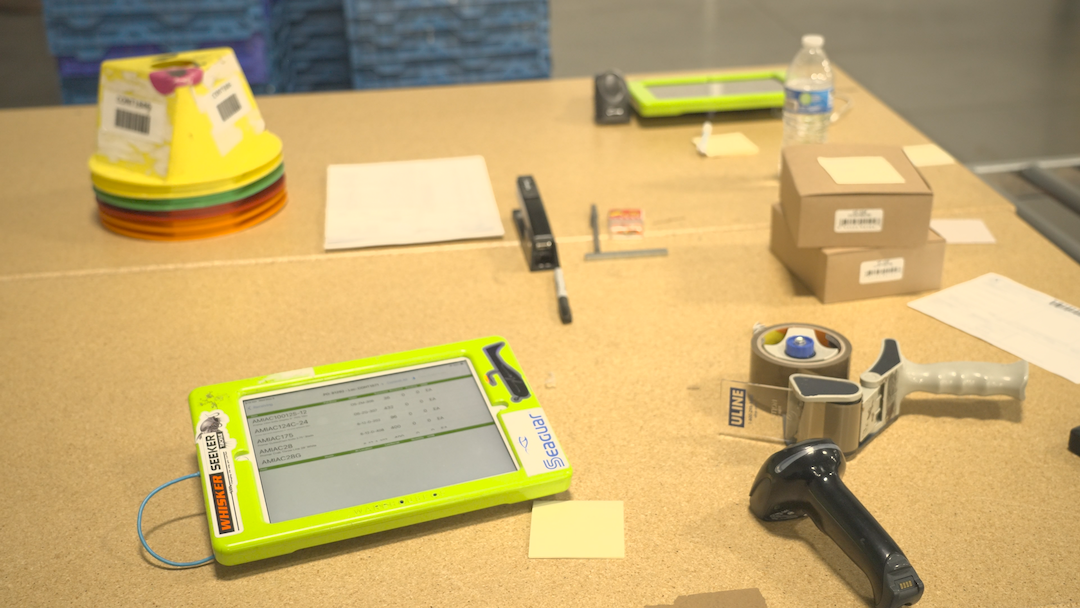
One of the Warehouse OS features Jamie credits most is the touchscreen iPad interface on each picking cart, built around a patented grid layout that mirrors the physical cart.
Two practical benefits show up in her operation. First, training speed. During peak season Minky Couture brings on a lot of temporary pickers, and a new hire can be productive in a few hours rather than a full day. Second, error reduction. Pickers see a photo of the product every time they scan, which matters when the catalog has roughly 256 active SKUs rotating in and out.
The system also supports user-level permissions. New pickers get more audible error checks, which sound like constant beeping across the warehouse. As experienced staff prove themselves, those restrictions are relaxed so they can pick faster. Confidence is earned, then rewarded with speed.
Culture as Competitive Edge
Sandy Hendry taught school for 30 years before founding Minky Couture, and Jamie believes that background shapes how the company runs every day. Birthdays are noticed. Santa delivers gift cards during the holiday push. Lunch is provided. The in-home seamstress program lets parents who cannot afford daycare keep working.
More structurally, the corporate office sits in the same building as the warehouse and shipping floor. That co-location is rare. A lot of brands separate corporate from fulfillment, and over time the warehouse starts to feel like a second-class part of the business. At Minky Couture, everyone shares the same break rooms. Sandy walks the warehouse. Jamie walks the warehouse. Morale gets read by being present.
Weekly Tuesday meetings rotate through department heads so every team has a voice. That culture translates directly into operations. Employees stay longer, picking accuracy is high, and cross-functional communication is genuinely good.
Omnichannel Order Routing
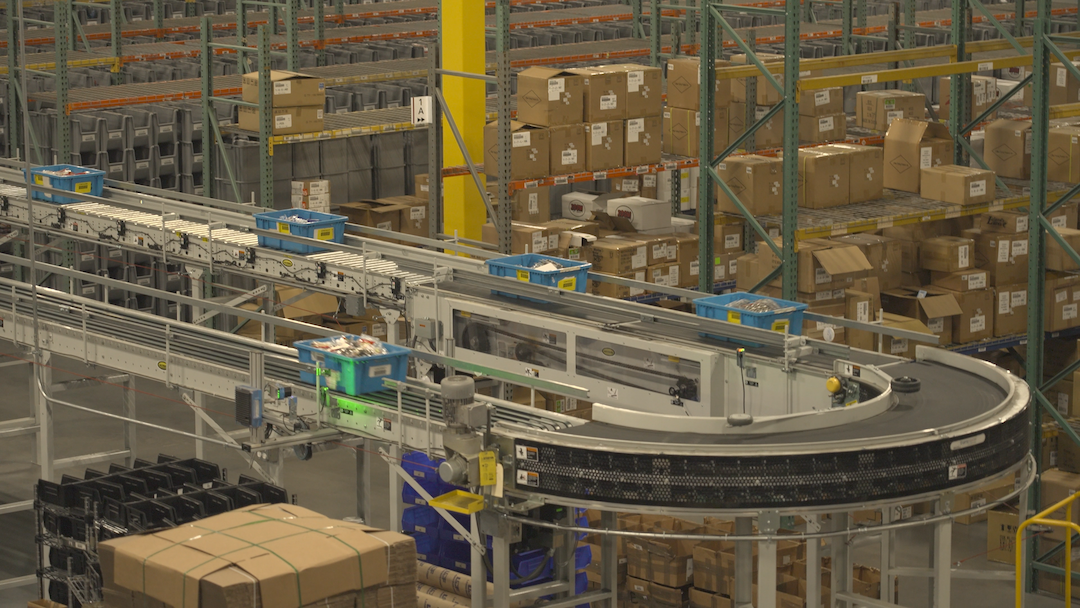
Minky Couture runs an unusually layered operation. There is a manufacturing line, imported inventory, direct-to-consumer e-commerce, a retail store network, and custom orders. Warehouse OS helped solve one of the trickiest parts of that mix: how store orders flow through the same inventory pool without starving e-commerce.
Each store has a dedicated link into Warehouse OS. Store managers can see available inventory but are capped at around 7% of stock, which protects the e-commerce channel. Stores order by the case rather than by single units, and the order sheet shows how many blankets ship per case.
Critically, those store orders are picked from upper overstock locations rather than from the primary pick floor. A dedicated pick path runs through the upper bulk. That means the pickers filling e-commerce orders on the main floor are not being decimated by concurrent store replenishment, which is what happens in many WMS platforms that do not separate bulk versus primary pick zones.
Each store also gets a weekly report showing what it sold and what trends look like, so store managers can make informed reorder decisions instead of guessing.
KPIs Done Right
Minky Couture tracks picks per hour and other warehouse KPIs, but the framing is deliberately positive. Employees see a leaderboard, and the team runs lighthearted competitions during peak season. The goal is never "you did not hit the bar." The goal is small wins, friendly rivalry, and clear targets for the day.
The team also rotates tasks. Rather than having one person pick all day, employees pick for a couple of hours, package for a couple of hours, then box for a couple of hours. Jamie says the rotation is more productive for their operation and keeps the work from becoming monotonous.
Operators also talk through daily goals together. How many orders are batched, how many are left, what today's finish line looks like. That shared visibility turns the warehouse into a team sport rather than an individual grind.
Solving Inventory Problems
Three operational lessons from Minky Couture are worth copying.
Allocated means allocated. Early in the Warehouse OS rollout, store managers would walk into the building and pull blankets off shelves that were already sold and allocated to customer orders. Jamie eventually explained it using an analogy about kids raiding cereal out of a pantry that someone else was counting on. Education fixed the problem, but the issue was real and it cost the team during the learning curve.
Home locations for bulky SKUs. Minky Couture's blankets are large. Some weighted blankets come in at 13 to 14 pounds. During one Christmas, they had hundreds of orders for a single product but could only fit 48 units in a Gaylord. Pickers were being sent to overhead locations over and over. The fix was a home location concept paired with min and max reporting. The system points pickers to the home location, which is kept topped up from a nearby holding bay whenever min thresholds trigger. Orders flow. Pickers stay on the ground.
Custom orders need careful allocation logic. Custom blankets take two to three weeks. If a customer orders a custom blanket and a regular blanket in the same order, the regular blanket is allocated but still physically sitting in inventory, which can throw off cycle counts. The team works through those edge cases one by one, treating each as a process puzzle to solve rather than a blocker.
The Optimization Window
Minky Couture treats the February to July stretch as its annual optimization window. Peak season runs heavier late in the year, so the quieter months get dedicated to process work.
Jamie sits down with the restock team, the inventory team, the fulfillment team, and shipping. She asks one question: where is your holdup. A shipping label that prints too slowly. A restock count that comes up off by the same amount every time. A handoff that creates confusion. Each one gets isolated and solved.
Her mental frame is this: "Where can we save five seconds? Those five seconds add up."
Repeated across every team every year, that mindset is a big part of why the operation scales without breaking.
Advice for Growing Brands
Jamie's advice for a small company trying to pick a warehouse management system is straightforward. Talk to other small businesses. Ask who they use. Ask what works and what does not. Ask for references and actually call them.
Minky Couture visited three or four other warehouses before committing to Warehouse OS. Some of what they saw did not apply. Some of it did, and those borrowed ideas became part of how the business runs today.
The underlying message: every warehouse is different. The operators who will help you most are the ones running a similar business at a similar scale.
Conclusion
Minky Couture did not scale by finding one perfect tool. They scaled by pairing a warehouse management system that was willing to study their real process, a culture that treats warehouse work as core to the brand, a leadership team that walks the floor, and a mindset that treats every five-second savings as real money.
HOJ Innovations is proud to be Minky Couture's software and material handling partner. If your brand is weighing whether to stay in self-fulfillment or send it out to a 3PL, the takeaway is simple. Self-fulfillment is harder, but with the right system and the right team behind it, it becomes one of the most durable competitive advantages a product company can build.
To see whether Warehouse OS fits your operation, request a walkthrough with the HOJ team.
Frequently Asked Questions
What is Warehouse OS?
Warehouse OS is a warehouse management system developed by HOJ Innovations. It pairs a touchscreen iPad interface with a patented cart-grid layout to speed training, reduce picking errors, and support omnichannel fulfillment for growing product brands.
When should a brand move from Google Sheets to a real WMS?
The signal is usually volume related. When order volume outpaces manual processes, when holiday peaks cause shipping backlogs, or when inventory visibility breaks down across multiple sales channels, it is time. Minky Couture's breaking point was a Christmas season spent manually typing every shipping order.
How long does Warehouse OS take to implement?
Implementation depends on the complexity of the operation, but the defining step is the on-site observation period. The HOJ team studies how the business actually runs before configuring the system, which is what allows for process-fit implementation rather than a generic rollout.
How does Warehouse OS support omni-channel fulfillment?
Warehouse OS lets brands route store replenishment through upper bulk pick paths while e-commerce orders run through the primary pick floor. Store managers can order against a capped share of inventory by the case, protecting direct-to-consumer stock and preventing one channel from starving another.
Is self-fulfillment better than using a 3PL?
It depends on the brand. Self-fulfillment pairs well with product-led companies that see every shipment as part of the customer experience. A 3PL can be the right call when geography, capital, or focus point elsewhere. Minky Couture chose self-fulfillment because product pride was central to the brand.
What makes the Warehouse OS touchscreen different?
The interface uses a patented grid layout on an iPad that matches the physical picking cart, with photos for every SKU at the point of scan. The combination shortens training for temporary staff to a few hours and reduces picking errors across a large, rotating catalog.